
Rotator Cuff Injury Treatment in Novato
Rotator cuff treatment in Novato, CA: shoulder adjustments, soft-tissue work and progressive rehab for tendinitis and impingement. Book a shoulder exam.
Chiropractic care for rotator cuff injury
Get to the root of your rotator cuff injury
Also known as: Rotator Cuff Tear, Rotator Cuff Tendinitis, Shoulder Impingement
If reaching overhead, sleeping on your side, or throwing a ball triggers sharp shoulder pain, your rotator cuff may be the culprit. Whether it's tendinitis from repetitive overhead work, impingement from a compressed bursa, or a partial tear from a sports collision, Dr. Douglas DeSalvo offers conservative rotator cuff treatment in Novato, CA — a drug-free plan aimed at rebuilding strength and range of motion — and refers honestly when surgery is the right next step.
Symptoms of rotator cuff injury
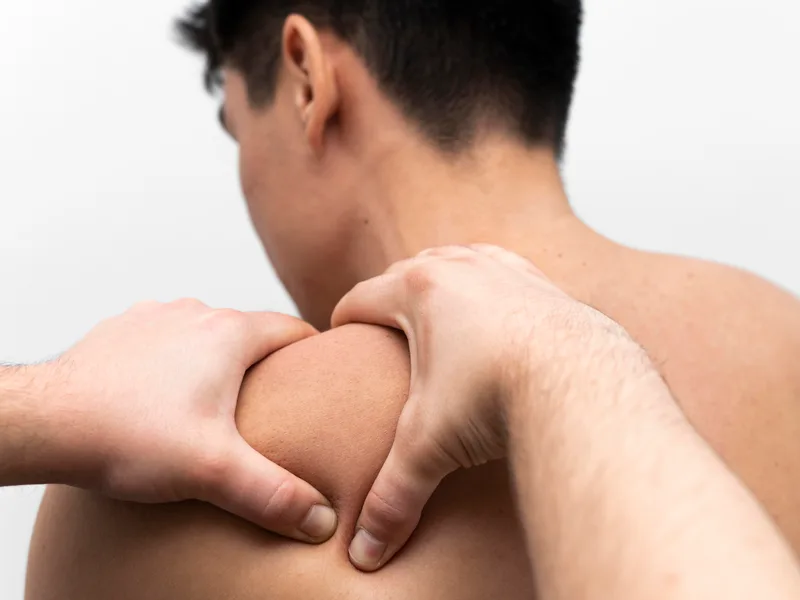
- ✓A deep, dull ache in the outer shoulder or upper arm
- ✓Pain that worsens when reaching overhead or behind your back
- ✓Weakness when lifting your arm or rotating it outward
- ✓Catching, clicking, or a pinching sensation at the top of your shoulder arc
- ✓Night pain that wakes you — especially when lying on the affected side
- ✓Stiffness and limited range of motion after rest
- ✓Shoulder fatigue that limits work or sport before the arm gives out
Common causes
- Repetitive overhead work or throwing that wears the tendon over time
- Acute injury from a fall on an outstretched arm or direct shoulder impact
- Forward-shoulder posture narrowing the subacromial space
- Age-related tendon degeneration, which becomes more common after 40
- Weakness in the rotator cuff and scapular stabilizers from disuse
- Thoracic stiffness that limits shoulder elevation mechanics
- Poor shoulder-blade control (scapular dyskinesis) during overhead movement
Our approach
How we treat rotator cuff injury in Novato
- Step 1
Thorough exam
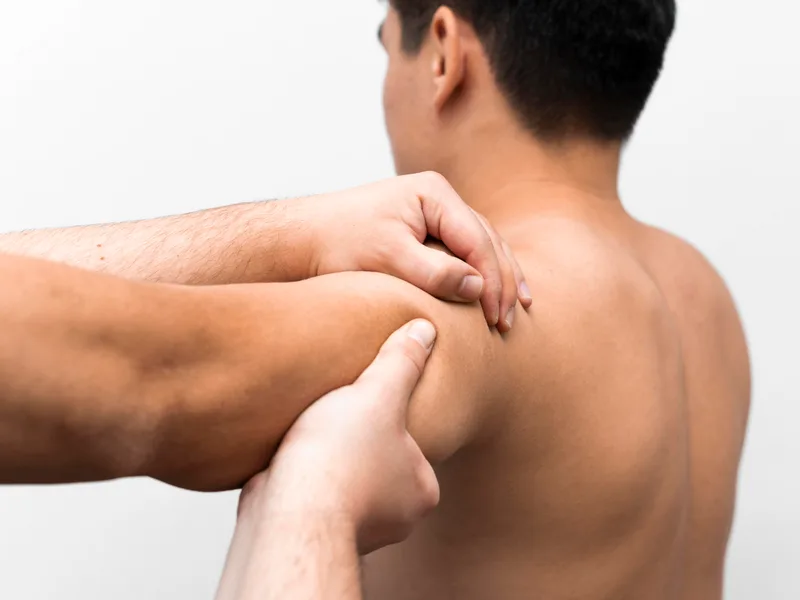
We assess shoulder range of motion, rotator cuff strength, impingement tests, and cervical and thoracic mobility to map the real source of your pain — and refer for imaging (ultrasound or MRI) when it will change your care.
- Step 2
A clear, personalized plan
You leave the first visit knowing what we found, whether conservative care is the right path, and — if it is — a specific, time-bound rehab plan with a realistic endpoint and clear criteria for when to escalate.
- Step 3
Soft tissue, adjustments & progressive loading
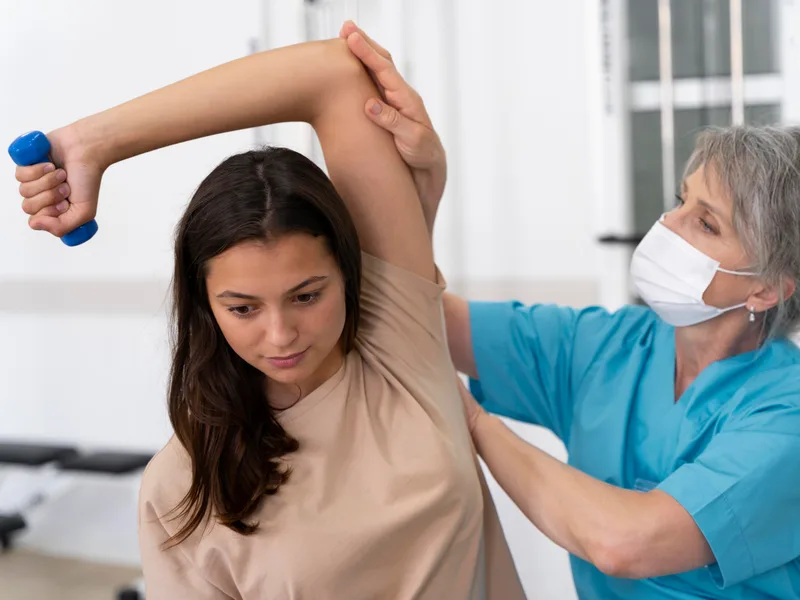
We combine shoulder and thoracic adjustments, soft-tissue release for the pec and lat, and a progressive rotator-cuff and scapular-stabilizer program to relieve pain now and rebuild the strength that protects the joint long-term.
The basics
Understanding rotator cuff injury
The rotator cuff is a group of four muscles and their tendons — supraspinatus, infraspinatus, teres minor, and subscapularis — that wrap around the head of the humerus and hold it centered in the shallow socket of the shoulder blade. Every time you lift, throw, or reach overhead, those tendons glide through a narrow space beneath the acromion. When the shoulder mechanics are off — from weakness, poor posture, or repetitive strain — that space narrows further and the tendons begin to fray, inflame, or tear. Tendinitis and impingement are the earliest and most treatable stages. Partial-thickness tears often respond to conservative care with proper loading and soft-tissue work. Full-thickness or massive tears may ultimately require surgical repair, and we will tell you clearly if that's where you land.
The good news is that many rotator cuff problems are at the tendinitis, impingement, or partial-tear stage — where conservative care is commonly recommended as a first step. Restoring joint centration through shoulder, thoracic, and cervical adjustments, releasing the tight pecs and lats that pull the shoulder forward, and then progressively loading the cuff with targeted rehab supports tendon healing and long-term shoulder health. Timing matters — earlier care often makes recovery more straightforward.
One visit. Real answers. A plan made for you.
Reserved for new patients: an unhurried first visit with Dr. DeSalvo himself. Your one-on-one consultation, comprehensive exam, muscle and nerve function assessment and first treatment, plus a care plan designed around you, all for $97.
What your New Patient Special includes
- A one-on-one consultation with Dr. DeSalvo
- A comprehensive exam
- A muscle & nerve function assessment
- Your first treatment
- A customized care plan, built around your goals
New patients only, one per person. X-rays are not included. If you choose to continue care, your care plan and its pricing are discussed with you up front. Not available for automobile-accident or personal-injury cases. Read the full New Patient Special disclaimer.
Types of rotator cuff conditions we treat
“Rotator cuff injury” covers a spectrum of presentations, and your care plan depends on which stage you’re in. We regularly help Novato-area patients with:
- Rotator cuff tendinitis — inflammation of one or more cuff tendons from overuse, typically the supraspinatus. Often responds to soft-tissue release, load management, and progressive strengthening. See our related shoulder pain page for the broader shoulder picture.
- Shoulder impingement syndrome — the tendon and bursa become pinched beneath the acromion during elevation. Often driven by forward-shoulder posture and scapular weakness — both of which we address directly.
- Subacromial bursitis — the bursa cushioning the tendon becomes inflamed and swollen, amplifying impingement pain. Conservative care and posture correction often help calm it.
- Partial-thickness rotator cuff tear — the tendon is frayed but not fully disrupted. Progressive tendon loading (eccentric and isometric exercises) is a common conservative approach, and many partial tears improve without surgery.
- Rotator cuff weakness from overuse or disuse — the cuff muscles atrophy after injury or prolonged rest, leaving the shoulder vulnerable to re-injury. Corrective exercise is the cornerstone of recovery here.
- Post-operative rotator cuff rehab — if surgery was necessary, we can co-manage your return-to-function rehabilitation once you’re cleared by your surgeon.
If you’ve been diagnosed with a full-thickness tear and are wondering whether surgery is avoidable, an honest exam and a supervised conservative trial will give you a real answer — not a guess. And if conservative care isn’t the right path, we’ll tell you before you invest time in it. Overhead athletes dealing with overuse injuries often present with early-stage cuff problems we can catch before they become structural.
When to see a chiropractor in Novato
Don’t wait until the shoulder is completely locked up or your arm gives out on the job. Consider booking an exam if you notice:
- Shoulder pain or weakness when lifting your arm above shoulder height
- Aching that lingers after activity or wakes you at night
- A catching or pinching sensation at the top of your shoulder arc
- Shoulder pain that followed a fall, collision, or sudden forceful pull
- Pain or tingling that travels from the shoulder into your arm or hand
- Shoulder stiffness that gets worse with rest and doesn’t loosen up with movement
- Any acute injury where you felt or heard a pop in the shoulder — seek evaluation promptly
Seek emergency care if you experience severe shoulder pain with inability to move the arm at all after a direct trauma — a significant full-thickness tear or fracture may be present.
What to expect at your first visit
Your first appointment runs about 45–60 minutes and is focused on understanding your shoulder before we treat it:
- Listen to your story — when it started, what movements provoke it, whether it’s related to a specific incident, and how it’s limiting your work, sport, or sleep.
- Examine thoroughly — rotator cuff strength and length testing, impingement provocation tests, shoulder and thoracic range of motion, and cervical screening to rule in or out a neck contribution.
- Explain what we found — in plain English, with a clear recommendation on whether conservative care is appropriate, whether imaging is needed first, and what a realistic recovery looks like.
- Start care when appropriate — many patients begin soft-tissue work and receive their first shoulder or thoracic adjustment the same day.
You’re never locked into open-ended treatment — just a specific plan with a real finish line, and honest escalation criteria if surgery needs to enter the conversation.
Drug-free rotator cuff relief — without medication or surgery
Anti-inflammatories and cortisone shots can reduce shoulder pain temporarily, but they don’t restore the shoulder mechanics or tendon strength that let you use your arm without pain. Surgery is sometimes necessary — and we will tell you when it is — but many rotator cuff tendinitis, impingement, and partial-tear cases improve with the right conservative approach. That means releasing the tight muscles pulling the shoulder forward, restoring joint motion in the shoulder, thoracic spine, and neck, and then progressively loading the tendon so it adapts and strengthens rather than continuing to fray. For Novato-area patients who want to get back to their sport, their job, or their sleep without drugs or downtime, this is where we start.
Why Novato-area patients choose DeSalvo Chiropractic
Patients from Novato and across Marin County choose us for shoulder care because we don’t guess — we examine thoroughly, explain clearly, and build a plan matched to your actual stage of injury. Dr. DeSalvo combines chiropractic adjustment of the shoulder, thoracic spine, and neck with hands-on myofascial release and a progressive corrective exercise and sports injury rehab program. We also know when conservative care has reached its limit and a surgical consult is the honest next step — and we’ll coordinate that referral without hesitation.
Ready to find out what’s driving your shoulder pain? Our New Patient Special makes your first visit easy, and you can book an appointment online in under a minute.
Why choose chiropractic
Chiropractic rehab vs. the typical rotator cuff routine
| Comparison factor | Chiropractic Care | Pain Meds & Surgery |
|---|---|---|
| Addresses the root cause | ✓Corrects mechanics and loads the tendon properly | ✕Masks pain or removes tissue |
| Drug-free & non-invasive | ✓Always | ✕Rarely |
| Risk of side effects | ✓Minimal | ✕Higher (meds, anesthesia, post-op) |
| Personalized to you | ✓Custom loading and mobility plan | ✕One-size-fits-all protocol |
| Builds long-term strength | ✓Progressive rehab included | ✕Seldom addressed without PT referral |
| Honest referral when needed | ✓Yes — full-thickness tears referred out | ✕Varies by provider |
Treatment options
Services we use to relieve rotator cuff injury
Chiropractic Care
Gentle, precise chiropractic adjustments in Novato, CA that restore motion to restricted joints and relieve back pain, neck pain, and headaches at the source.
Learn more →Myofascial Release
Myofascial release in Novato, CA — slow, sustained hands-on pressure that frees tight fascia to ease neck, back, shoulder, and arm pain. Book your first visit.
Learn more →Physiotherapy
Physiotherapy in Novato, CA — corrective exercise, manual therapy, and rehab that rebuild strength and help keep back, neck, and shoulder pain from returning.
Learn more →Athlete Care
Athlete care in Novato, CA — hands-on treatment and a staged return-to-sport plan for strains, sprains, and overuse injuries at every level. Book an exam.
Learn more →Related conditions
Other conditions we treat in Novato
Patient reviews
What our Novato patients say
“I had a great experience at DeSalvo Chiropractic! Everyone was friendly, welcoming, and professional, and I felt comfortable from the moment I walked in. They took the time to listen to my concerns and made sure I understood what they were doing throughout my visit.”
“Great chiropractic service! The staff was friendly and professional, and I felt comfortable throughout my visit. The treatment was helpful, and I would definitely recommend them to anyone looking for quality chiropractic care.”
“I am an avid tennis player with the usual tennis injuries and Dr. Desalvo has helped me play again without pain!”
What causes a rotator cuff injury?
Most rotator cuff injuries develop from cumulative overuse — repetitive overhead lifting, throwing, or reaching that gradually wears the tendon. A single traumatic event like a fall or collision can also tear the cuff acutely. Contributing factors include forward-shoulder posture, weak scapular stabilizers, stiff thoracic spine, and the natural tendon changes that become more common after 40.
Can a chiropractor help a rotator cuff injury?
Often, yes, for tendinitis, impingement, and many partial tears. Conservative care that restores shoulder mechanics, releases tight surrounding muscles, and progressively loads the cuff is a commonly recommended first-line approach. Full-thickness tears may ultimately need surgical repair, and we'll tell you honestly if that's the case after your exam.
How do I know if I have a rotator cuff tear or just tendinitis?
Both produce shoulder pain, but tears tend to cause more weakness and a greater loss of active range of motion. Impingement tests and strength testing during your exam give us a good clinical picture. When the findings suggest a significant tear, we refer for ultrasound or MRI to confirm before committing to a care plan.
How many visits will I need?
It depends on the stage of the injury and how long you've had it — mild tendinitis usually needs a shorter plan than a partial tear with meaningful weakness. Dr. DeSalvo gives you a specific plan with a clear endpoint after your exam — not open-ended treatment.
Will my insurance cover rotator cuff chiropractic care?
Many major plans cover chiropractic for shoulder injuries. We verify your benefits before your first visit so there are no surprises. Self-pay options are available as well.
Is chiropractic treatment for the rotator cuff safe?
Yes. We screen for contraindications during your exam. Adjustments to the shoulder, thoracic spine, and neck are gentle, and the exercise progression is staged so the tendon is never overloaded before it's ready.
What if I need surgery — do you still refer out?
Absolutely. Full-thickness or massive tears, or partial tears that fail to improve with a proper conservative trial, should be evaluated by an orthopedic surgeon. We coordinate that referral and document your conservative care thoroughly so the surgeon has the full picture.
Can I still exercise with a rotator cuff injury?
Lower-body and core work that keeps the shoulder unloaded is usually fine. We give you specific guidance on what to modify or avoid while the shoulder heals, and the rehab we prescribe is designed to load the cuff safely through its recovery — not avoid it entirely.
Do you treat rotator cuff injuries from sports?
Yes. Rotator cuff injuries are common in overhead athletes — swimmers, pitchers, volleyball players, and CrossFit athletes — as well as workers who lift or reach overhead all day. Sports injury rehab is a core part of our care, and we build return-to-sport criteria into every athlete's plan.
Does rotator cuff injury cause neck pain too?
It can work both directions. A stiff or restricted lower cervical spine can alter how the shoulder blade moves and increase cuff loading. Conversely, chronic shoulder guarding often tightens the upper traps and contributes to neck pain. We assess and treat both in the same plan when that overlap is present.